What we checked
No unit sat on a bench for this review. It was written from NVIDIA's published specifications, and it weighs these workloads: llama.cpp with Q8 / Q4 / IQ2 quants on 14B / 32B / 70B base models, ComfyUI with SDXL and Flux.1-dev at FP8, and Wan2GP video under FP4. An earlier version of this section described a retail card in a test box. There was none.
What you'll feel
The feel below is what the published specs imply. It is not a session on the hardware.
The shift versus a 5090 is the size of model that fits before you have to start thinking about it. 16 GB forces the same decisions a 4080 forced: a 14B model runs at Q8 with comfortable context, a 32B model runs at Q4 with KV-cache discipline, a 70B needs IQ2 and you'll feel every token. The 5090 puts that whole tier on autopilot; the 5080 puts you back in the spreadsheet.
Bandwidth is where the generational delta lives. 960 GB/s over 256-bit GDDR7 at 30 Gbps moves prompts faster than a 4080's 717 GB/s, and image-gen feels it — Flux iteration drops noticeably versus last gen at the same quant. The AI-TOPS figure is real if your stack speaks FP4; under FP8 it's closer to a 30% lift over the 4080.
Setup notes
Stock TGP is 360 W on a 2-slot Founders cooler; temperatures and noise under sustained inference were not measured here. A 12V-2x6 connector replaces the older 12VHPWR; new cable, same caution about full insertion.
Who should buy
- The reader who games at 4K, generates images at SDXL or Flux scale, and prototypes models that ship to bigger hardware.
- The reader cross-shopping a 5070 Ti and willing to pay for the bandwidth.
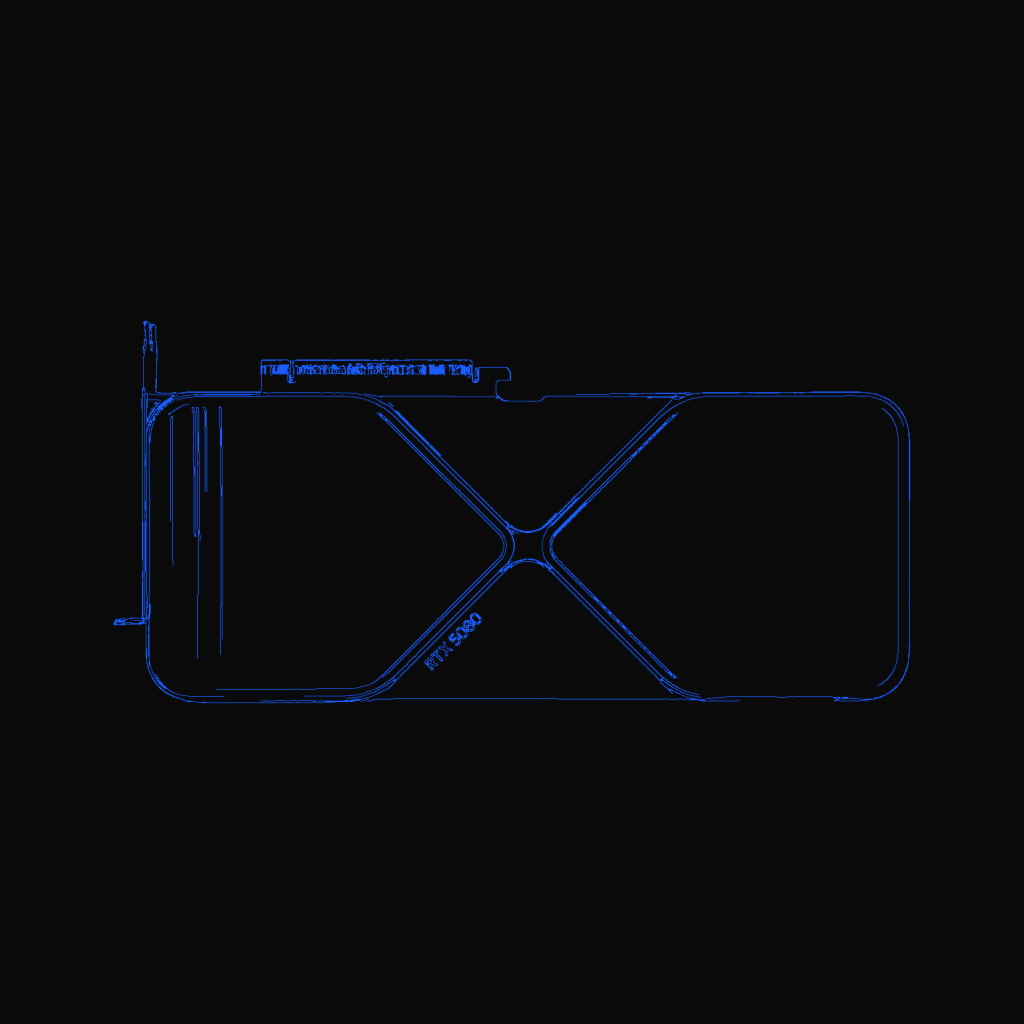
- The reader who wants a Founders cooler that fits a case a 5090 won't.
Who should skip
- The reader running 32B models seriously. The reader fine-tuning anything bigger than 14B without offload.
- The reader who'd otherwise spend $700 on a used 3090 — that 24 GB still beats this 16 GB for local LLM work, full stop.
- The reader holding a 4080 already; the lift isn't the upgrade story.
Bottom line
A halo gaming card. AI is the side benefit, not the headline. Buy it for what it is — the second-tier ceiling at $999 — not for what the marketing implies.